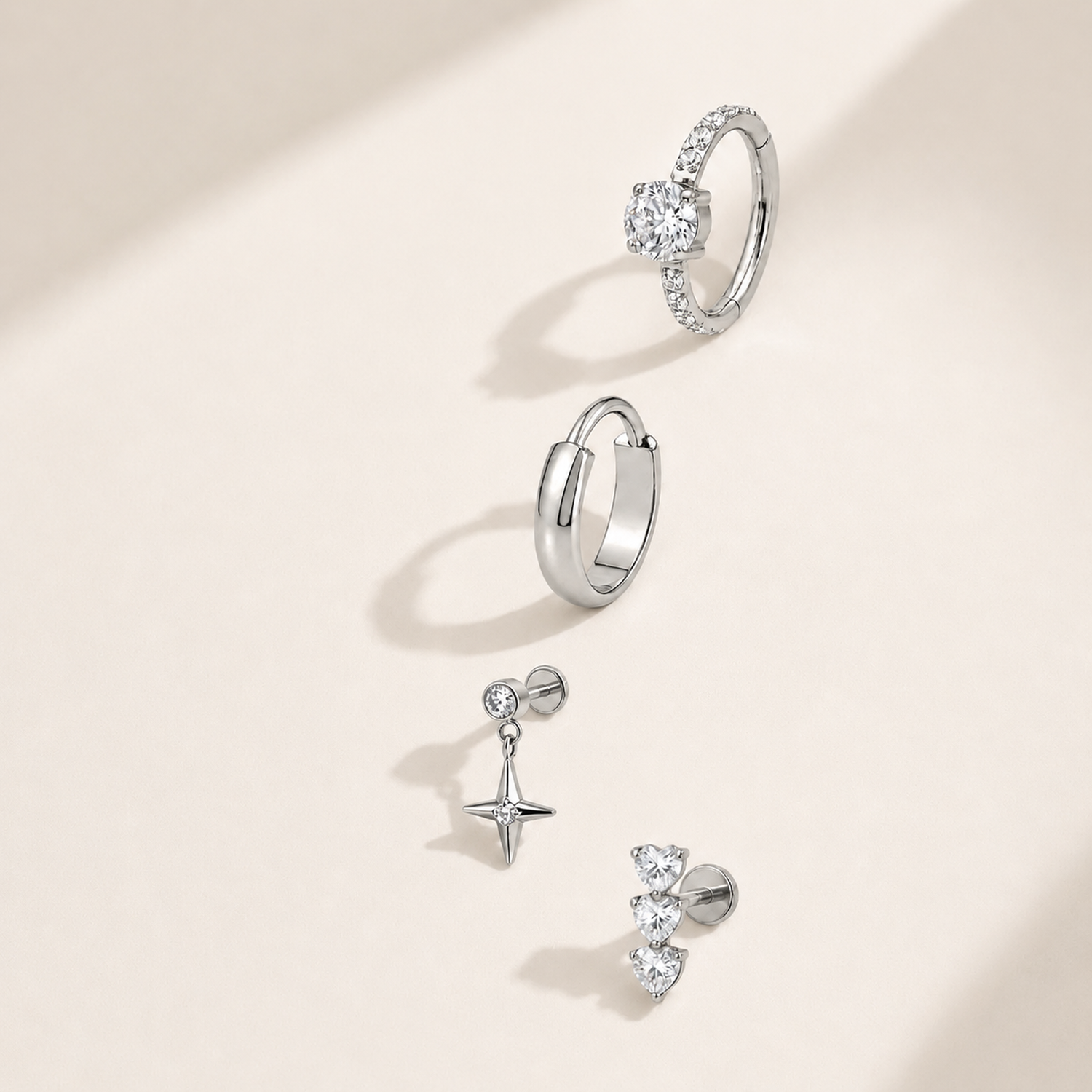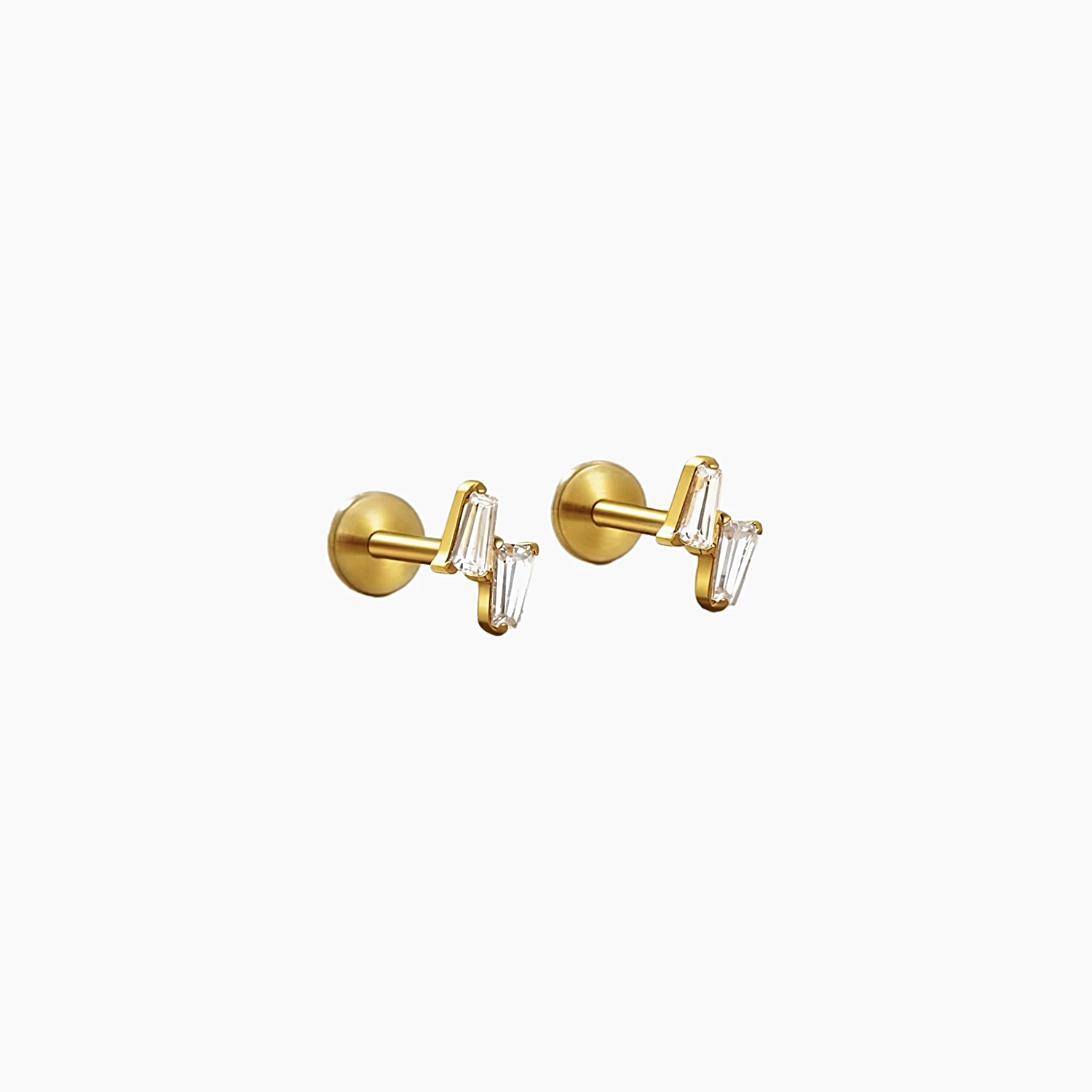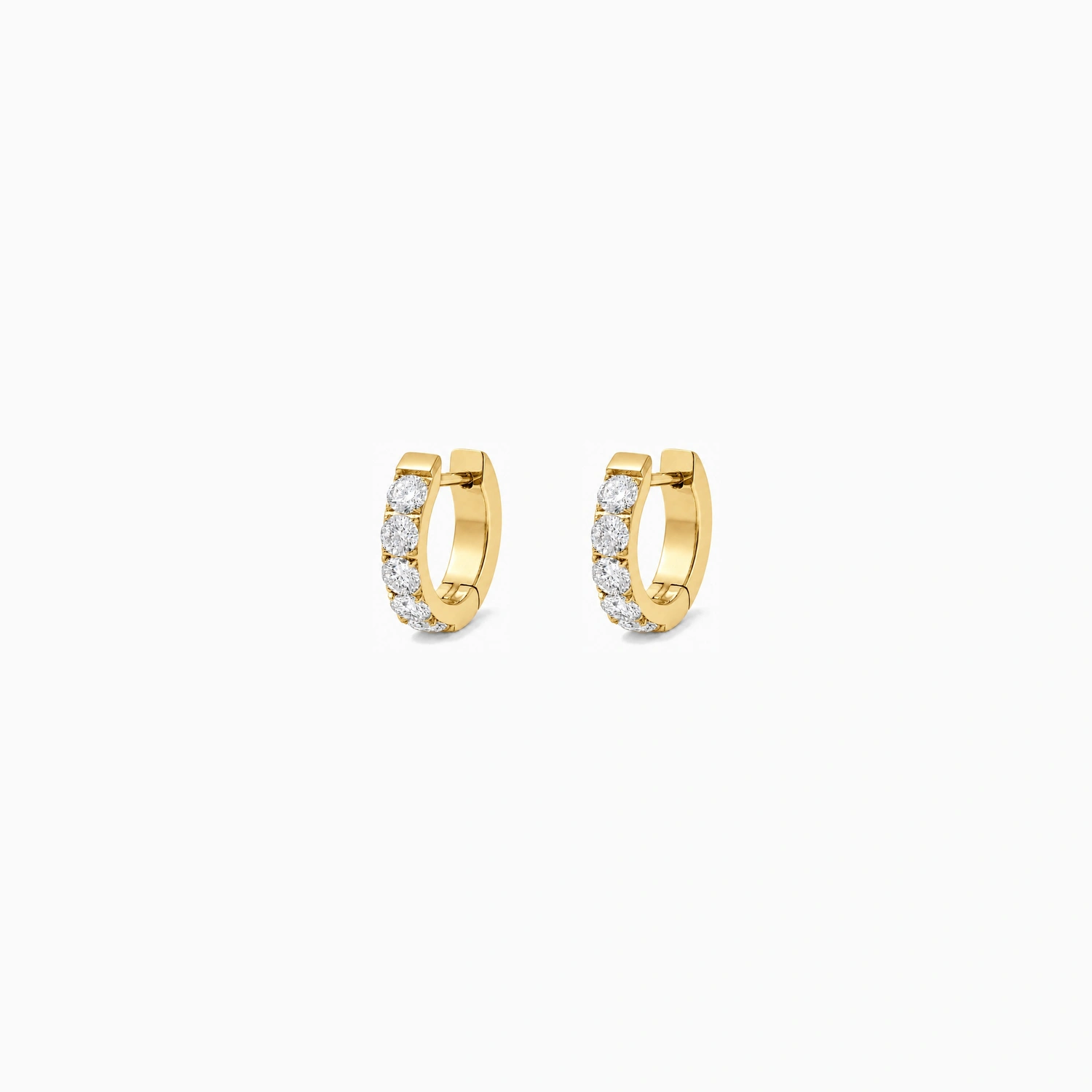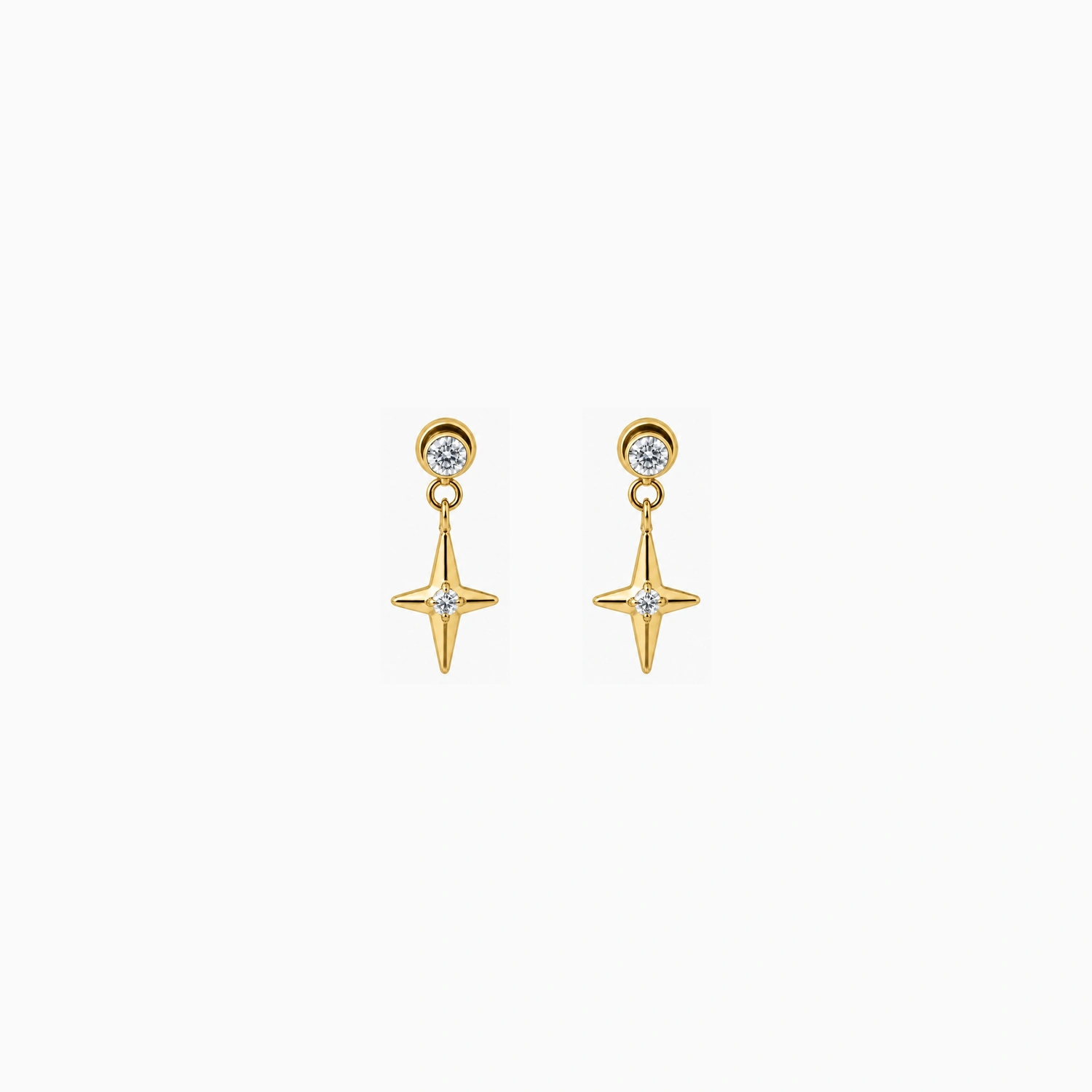

— 01 — WHY TITANIUM
Why Choose Titanium Earrings?
Sensitive ears deserve more choices.
Titanium is lightweight and corrosion-resistant, making it a practical choice for everyday earrings—especially for people looking for alternatives to nickel-containing jewelry. EaseTi uses ASTM F136 implant-grade titanium for its titanium components. Explore the benefits below, and learn how materials, finishes, and fit work together to shape your wearing experience.
—02 — MATERIAL & COMFORT
Why Titanium for Sensitive Ears?
The material beneath the finish matters. EaseTi chooses ASTM F136 titanium for our titanium jewelry components, with styles available in natural titanium and gold-tone finishes. The base material, surface finish, weight, and fit all contribute to the wearing experience.
2.1. No Intentionally Added Nickel
Nickel is not intentionally added as an alloying element in the ASTM F136 titanium used for our titanium components.The complete piece matters too—including the post, backing, decorative parts, and any surface coating. Check each product’s material and finish details before choosing.
2.2. Titanium Base, Your Choice of Finish
Choose the natural metallic tone of titanium or a gold-tone finish to suit your style. Titanium forms the underlying base, while the surface finish creates the appearance.For gold-tone styles, check the product description for coating details and follow the care guidance for the finished piece.
2.3. Lightweight for Everyday Styles
Titanium combines low density with strength, making it a practical foundation for lightweight earrings.The weight you wear depends on the complete design, including its size, stones, and decorative details. Consider the whole piece when choosing your everyday styles.
2.4. Comfort Beyond the Metal
Post length, smooth contact surfaces, backing style, and overall fit all affect how an earring feels.Choose dimensions and closures that suit your piercing and routine. Individual sensitivities vary; no material or finish can guarantee irritation-free wear for everyone.
— 03 — KNOW YOUR TITANIUM
What Is ASTM F136 Implant-Grade Titanium?
ASTM F136 specifies chemical, mechanical, and metallurgical requirements for Ti-6Al-4V ELI titanium alloy used in surgical implant applications.It is an alloy, rather than commercially pure titanium. “G23” or “Grade 23” alone does not establish compliance with ASTM F136. A material specification does not certify the complete earring. Construction, finish, dimensions, and fit need their own consideration.
THE EaseTi MATERIAL STANDARD
Material standard
Details
Specification
ASTM F136
Alloy
Ti-6Al-4V ELI
Nickel
Not intentionally added as an alloying element
Documentation
Material & testing reports
— 04 — COMPARE WITH CONFIDENCE
How Do Earring Materials Compare?
Start with a documented material and the complete piece. A metal name alone cannot tell you how an earring will feel.
Material
Key differences
What to check
ASTM F136 titanium
ASTM F136 titanium is a lightweight titanium alloy that meets a material specification for surgical-implant applications. Its strength and corrosion resistance make it well suited to lightweight, finely detailed jewelry, including posts, flatbacks, and gemstone settings. Compared with commercially pure titanium, its alloy composition provides greater strength and more flexibility in delicate jewelry design.
Material documentation, component coverage, finish, and fit.
ASTM F67 Commercially Pure Titanium
ASTM F67 commercially pure titanium is unalloyed titanium specified for surgical-implant applications. It combines low weight, corrosion resistance, and good ductility, and is used in selected medical components and piercing jewelry. Available in different grades, it offers a range of strength and forming properties for different designs.
The titanium grade, documentation of ASTM F67 compliance, and materials used in posts and backs.
Surgical / stainless steel
Strong and corrosion-resistant, stainless steel is widely used in earrings and piercing jewelry. Many alloys contain nickel, so the exact composition matters for nickel-sensitive wearers. “Surgical steel” alone does not identify an implant material standard; documented grades such as ASTM F138 provide more specific information.
The specific alloy and supporting standard, rather than “surgical” alone.
Solid gold
Commonly used in fine earrings and decorative piercing jewelry, solid gold offers a precious-metal finish throughout the material rather than a thin surface layer. Its hardness, color, and skin compatibility depend on karat and alloy composition. It typically costs more than titanium or steel, and the gold content alone does not establish suitability for sensitive ears.
Karat, alloy composition, and the materials in posts and backs.
Sterling silver
Containing 92.5% silver, sterling silver is popular for fashion earrings because of its bright appearance and design versatility. It can tarnish and needs periodic cleaning to maintain its finish. It is better considered for healed-piercing fashion jewelry rather than initial piercing jewelry, and posts and backs should be checked separately.
Full component details, finish, and care requirements.
Plated / coated jewelry
A surface layer adds color or finish to a base material, allowing a wide range of styles and price points. Common in fashion earrings, its durability depends on the coating, application method, and wear conditions. Some finishes wear through over time, exposing the base underneath, so both the coating and all skin-contact materials matter.
The base metal, coating, and every skin-contact component.
Titanium describes a base material; gold-tone describes an appearance. Gold-tone titanium earrings may also have a surface coating, so check each product’s finish details.Material standards are not a simple quality ranking. The complete construction, surface finish, dimensions, and individual sensitivities all matter.
— 05— THE DETAILS THAT TOUCH YOUR EAR
How to Choose Titanium Earrings for Everyday Comfort
Once you’ve chosen the material, consider the details that shape how your earrings feel throughout the day.
5.1 ·Consider the Whole Earring’s Weight
Size, stones, and decorative details all contribute to weight. If you prefer a lighter feel, compare the weight per earring—not just the metal—and consider how several pieces will feel together in an ear stack.
5.2 · Check Post Length and Hoop Diameter
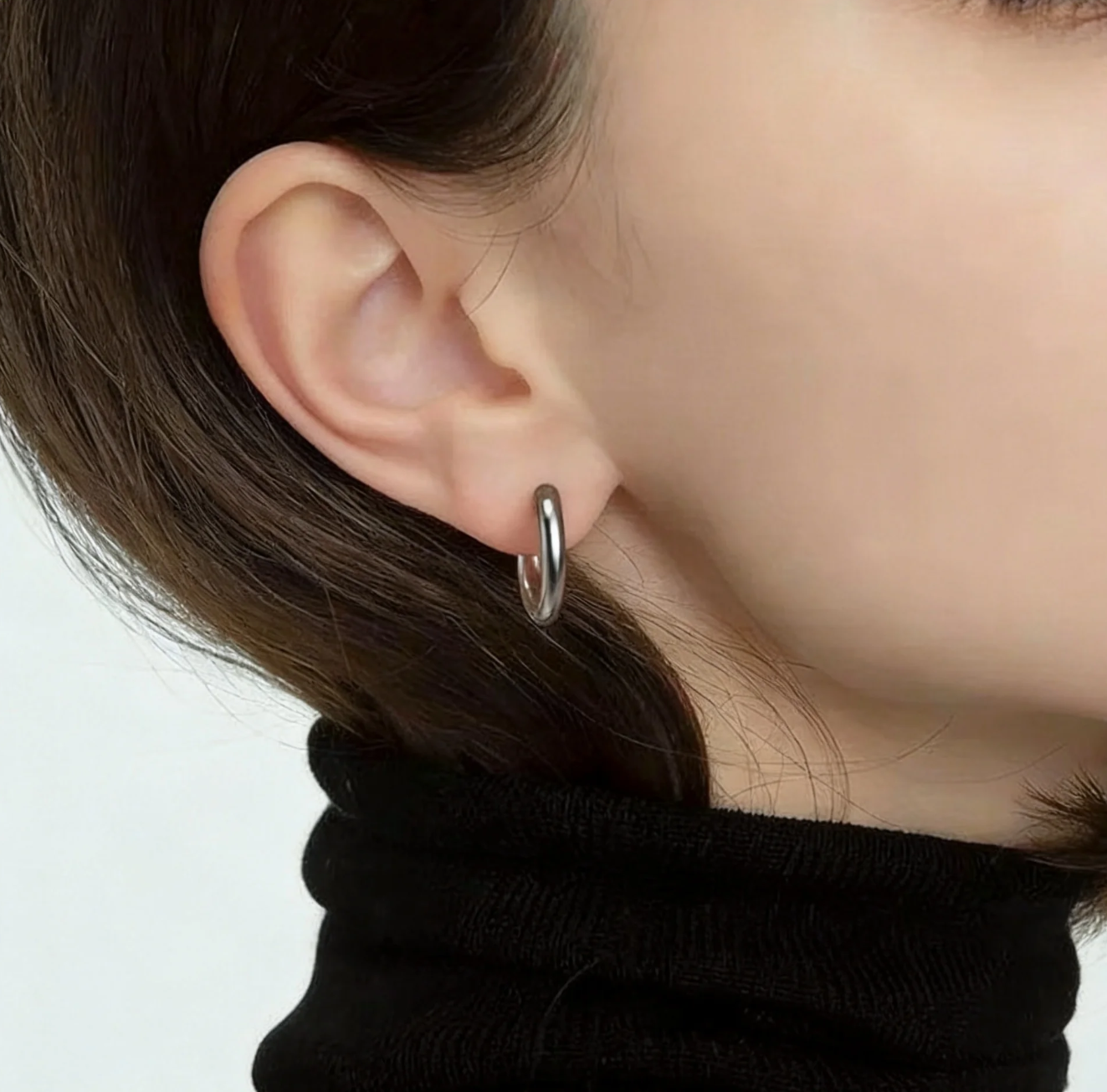
Post length affects the space available around your piercing, while a hoop’s inner diameter determines how closely it sits around your ear. Compare product measurements with a well-fitting piece you already own, and use model photos as a guide to appearance.
5.3 ·Choose a Backing That Suits You
Flatbacks, butterfly backs, and hoop closures fasten differently. Check the product’s backing and fastening method, and choose a style you can comfortably handle. Smooth contact surfaces and a suitable fit matter alongside the closure type.
5.4 · Match the Finish to Your Routine
Natural titanium and gold-tone finishes may need different care. Check the guidance for the complete piece, including coatings and stones, especially if you regularly wear earrings during exercise or around water.
Read Our Jewelry Care Guide