
Lab-Grown Diamond Guide: 4Cs, IGI Reports & CTW | EaseTi
Black Friday: Up to 25% Off · Free Hair Clips $120+ ×
Home » Lab-Grown Diamond Guide

Lab-Grown
Diamond
Guide

Learn what lab-grown diamonds are, how to compare their grades, and how to verify the two diamonds in a pair of studs.
What Is a Lab-Grown Diamond?

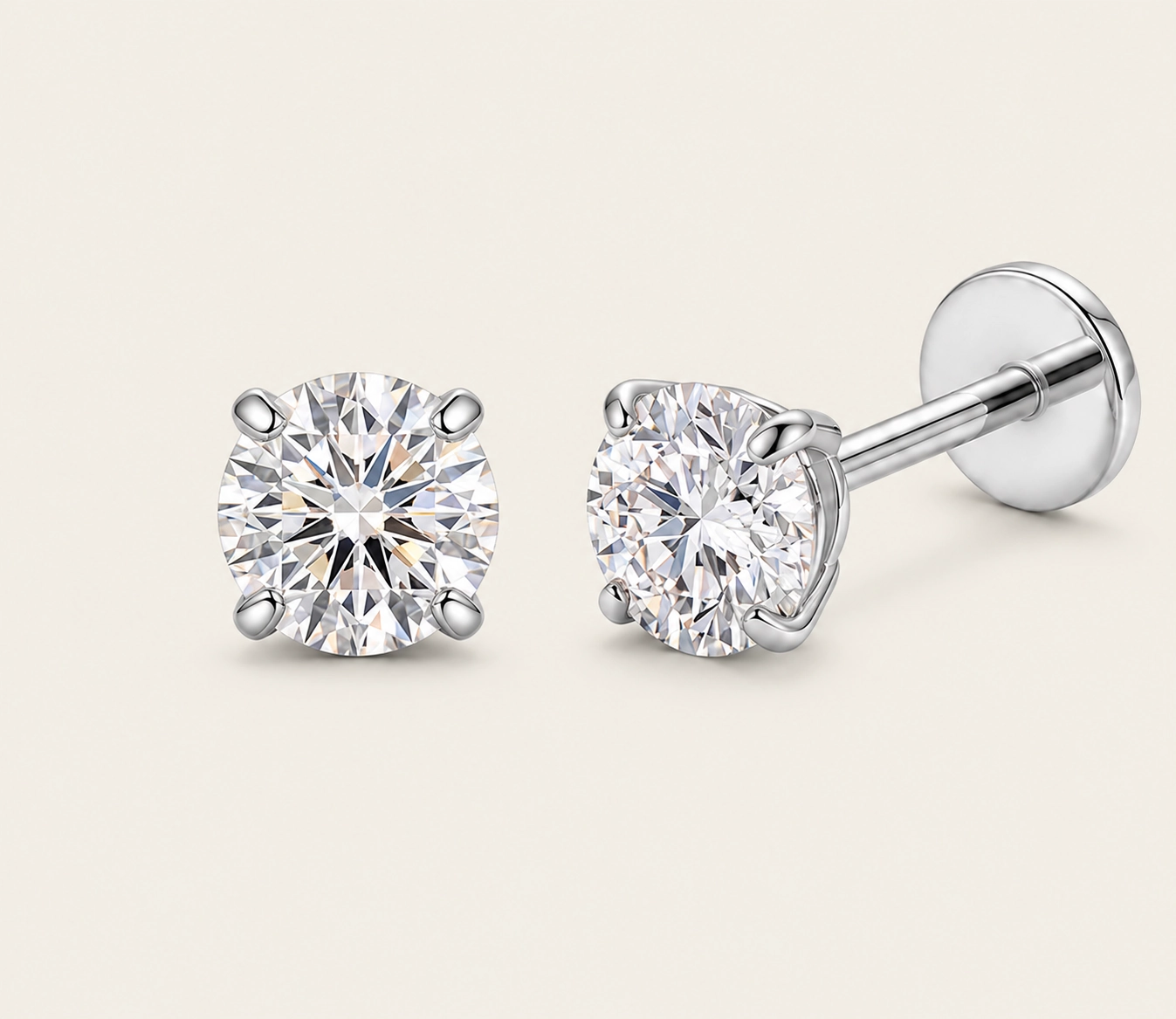
A lab-grown diamond is a diamond formed under controlled conditions in a laboratory. It has the same diamond crystal structure as a mined diamond and can be graded for cut, color, clarity, and carat weight.HPHT and CVD are two common growth methods. An independent grading report can identify a diamond’s laboratory-grown origin and document the grades of that individual stone.

The 4Cs of lab-grown diamonds

Cut, color, clarity, and carat weight each describe something different about a diamond.

Cut

Brilliance & sparkle

Ideal · A top cut grade on IGI round brilliant reports
Excellent · A high cut grade
Very Good / Good · Progressively lower cut grades
Fair / Poor · Lower cut grades, where applicable.

Color

Color grade

D–F · Colorless
G–J · Near colorless
K–M · Faint tint
N–R · Very light tint
S–Z · Light tint

Clarity

Internal characteristics

FL / IF · Flawless / Internally Flawless
VVS1 / VVS2 · Very, Very Slightly Included
VS1 / VS2 · Very Slightly Included
SI1 / SI2 · Slightly Included
I1 / I2 / I3 · Included

Carat

Diamond weight

ct · Weight of an individual diamond
CTW · Combined diamond weight for the pair

IGI Reports, Your Choice.

Both options feature diamonds with the same quality specifications and selection standards. You can choose whether to include an individual IGI grading report for each diamond with your purchase.
If you’d like an individual IGI report for each diamond, please allow 20 additional business days for IGI to grade both diamonds and issue their reports before we ship your earrings.

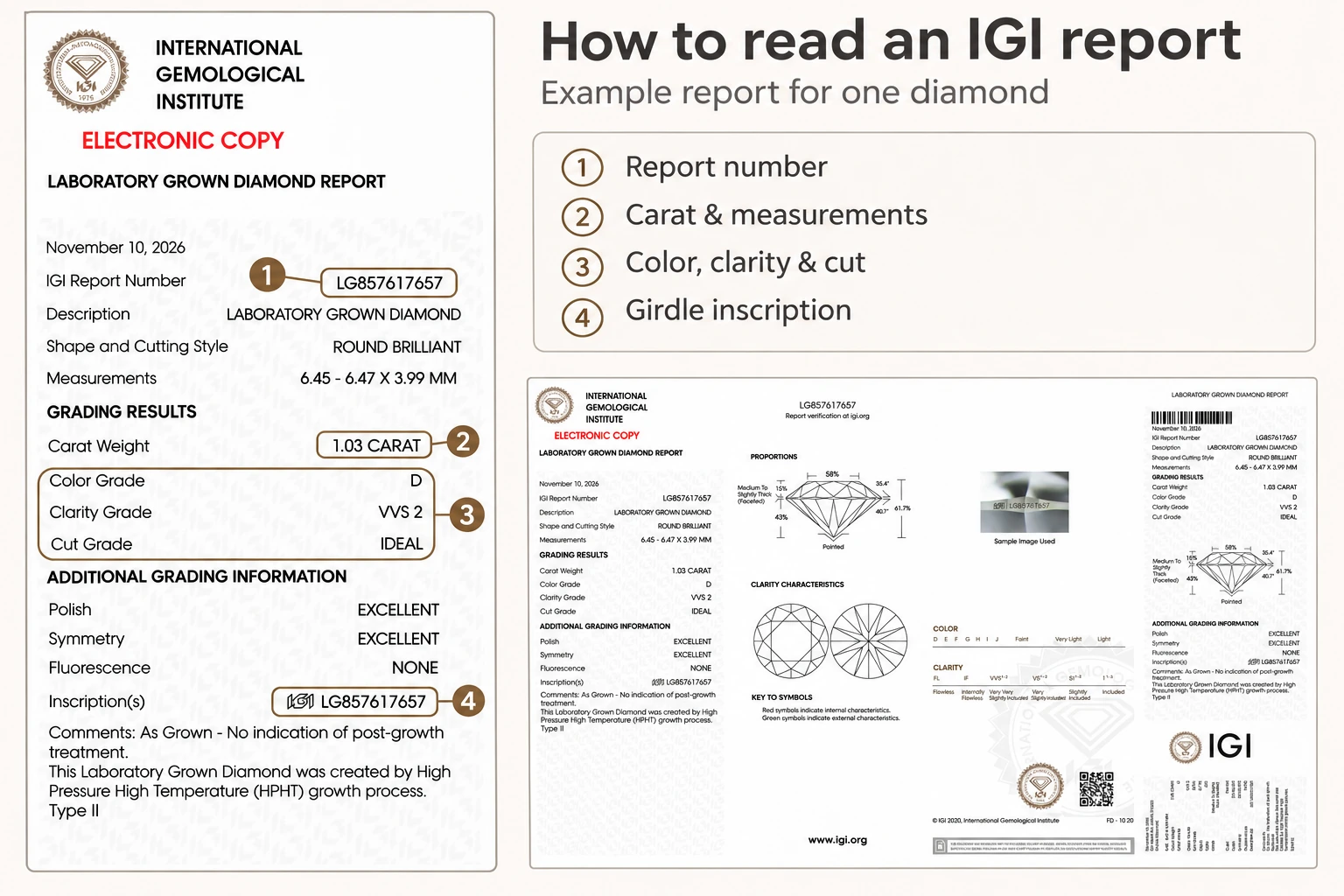
How to verify each diamond

01

Find the report number

For diamonds purchased with the IGI Report option, locate the unique report number on each IGI report.


02

Carat & measurements

The diamond’s individual carat weight and physical dimensions.


03

Color, clarity & cut

The individual grades that describe the diamond’s color, clarity and cut quality.


04

Match the inscription

Check the laser inscription on the diamond’s girdle.


Verify your IGI report
Carat vs. total carat weight

CTW is the combined weight of both diamonds. The carat weight on each individual report belongs to one diamond.
Frequently asked questions

Yes. Lab-grown diamonds are real diamonds with essentially the same chemical composition, crystal structure, hardness, and optical properties as natural diamonds. The main difference is their origin: lab-grown diamonds are created in a controlled environment rather than formed naturally underground.

Lab-grown diamonds can be produced in a controlled environment with a different supply chain and production process. This generally makes them more affordable than natural diamonds of comparable quality.

IGI stands for the International Gemological Institute, an independent gemological organization established in 1975.

IGI provides professional grading reports for natural diamonds, lab-grown diamonds, gemstones, and jewelry. Its diamond reports document important characteristics such as a diamond's origin, carat weight, color, clarity, and cut, helping buyers better understand the stone they are purchasing.

With IGI Report: Each diamond comes with its own IGI grading report, so you’ll receive two reports per pair. You can verify each report online. If you choose this option, please allow 20 additional business days for IGI to grade both diamonds and issue their reports before we ship your earrings.

Without IGI Report: Your pair comes without individual IGI grading reports.

We use the same diamond selection standards for both options.

Both options feature diamonds with the same quality specifications and selection standards. The choice only affects whether independent IGI grading documentation is provided.

No. Both options feature diamonds with the same quality specifications and selection standards. Choosing the option without an IGI report does not mean choosing a lower-quality diamond. 

For the With IGI Report option, yes. Each diamond comes with its own individual IGI grading report. A pair of earrings includes two diamonds and two separate reports, allowing you to review each stone individually. The Without IGI Report option does not include individual IGI grading reports.

If you select the option with IGI reports, you can enter each report number on the official IGI website to view its grading details.

You can also ask a jeweler to examine the diamond's girdle under magnification to check its corresponding laser inscription.

No. An IGI grading report evaluates and documents a diamond's gemological characteristics. It does not guarantee its retail price, resale value, or future investment value.

The market price of a diamond also depends on factors such as market conditions, supply, demand, and the seller.

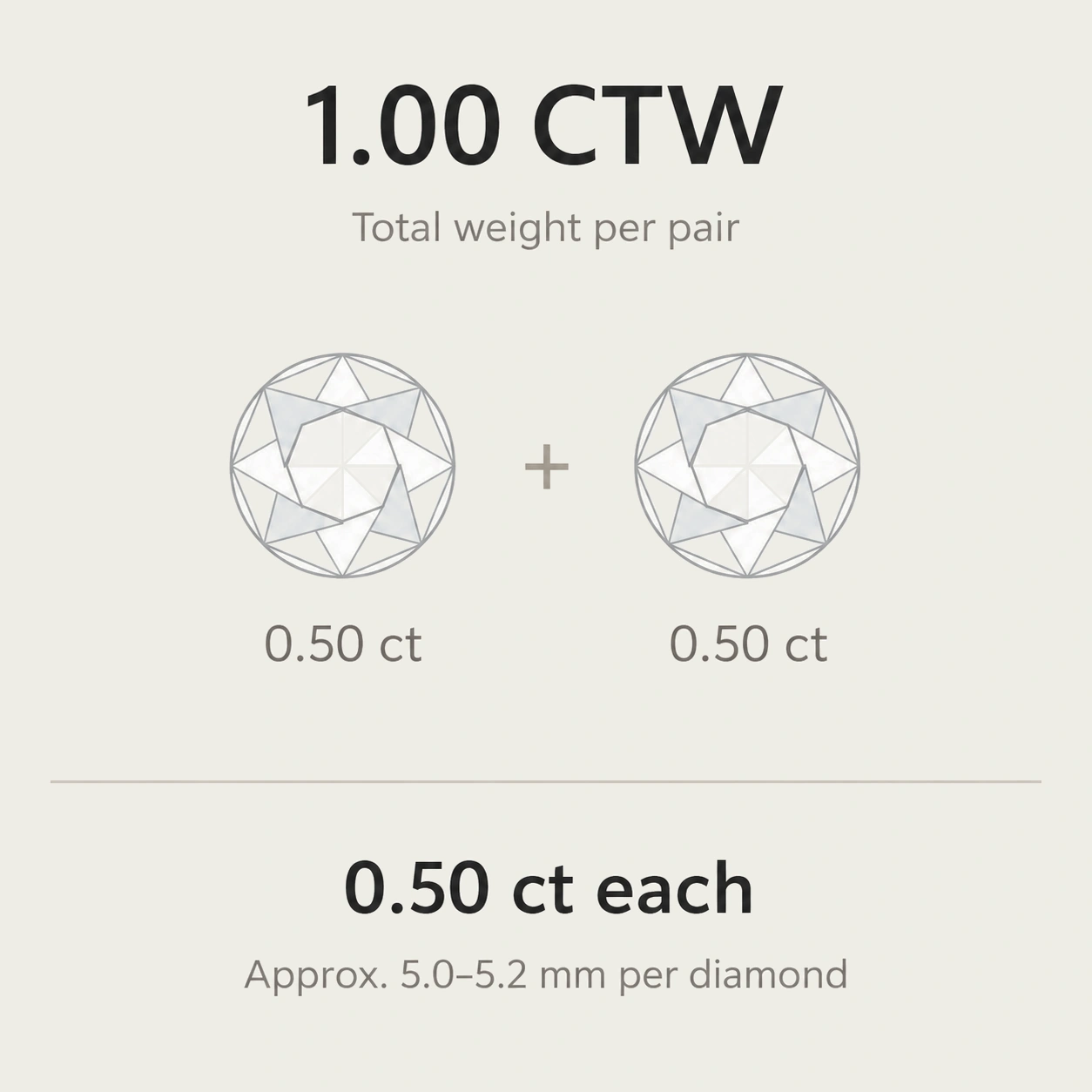
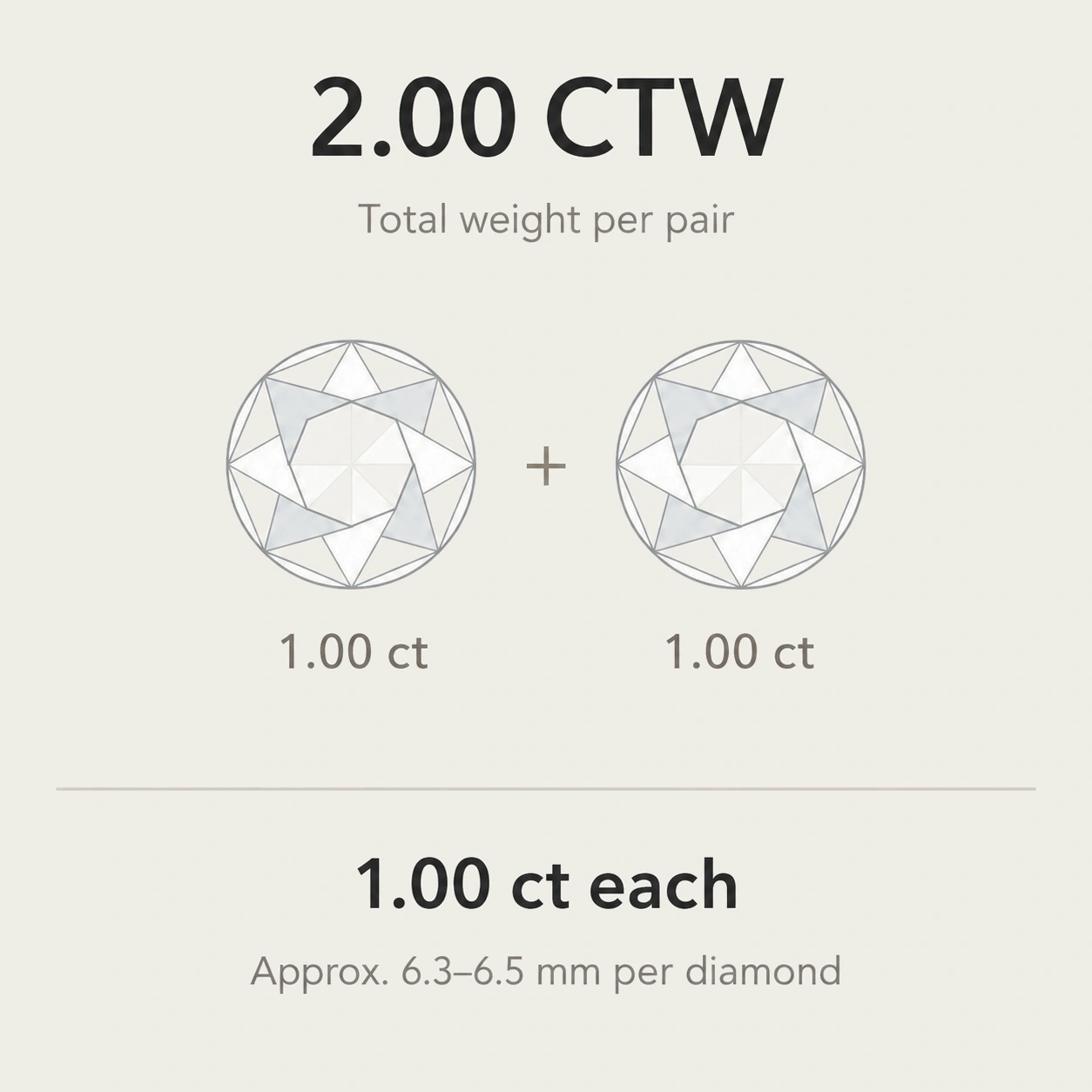
CTW stands for Total Carat Weight, which is the combined weight of both diamonds in a pair.

For example:

  • 1.00 CTW: Two diamonds of 0.50 ct each.

  • 2.00 CTW: Two diamonds of 1.00 ct each.

The carat weight shown for each individual diamond is different from the total carat weight of the pair.

Our 1.00 CTW option features two 0.50 ct diamonds, approximately 5.0–5.2 mm each. It offers a refined, understated look for everyday wear.

Our 2.00 CTW option features two 1.00 ct diamonds, approximately 6.3–6.5 mm each, creating a more noticeable and eye-catching look.

Choose the size that best suits your personal style.

Yes. Titanium is a strong, lightweight, and corrosion-resistant metal that can be used for diamond settings. When properly designed and crafted, titanium settings can securely hold diamonds while offering a comfortable wearing experience.

At EaseTi, we use ASTM F136 implant-grade titanium, combining the durability of titanium with the brilliance of lab-grown diamonds.

No. Lab-grown diamonds have the same hardness and durability as natural diamonds. They do not naturally lose their brilliance over time.

Everyday oils and residue can temporarily affect their sparkle, but regular gentle cleaning can help maintain their appearance.

  • Menu
Close

Your Cart 0

Close

Shopping cart is empty!

Continue Shopping